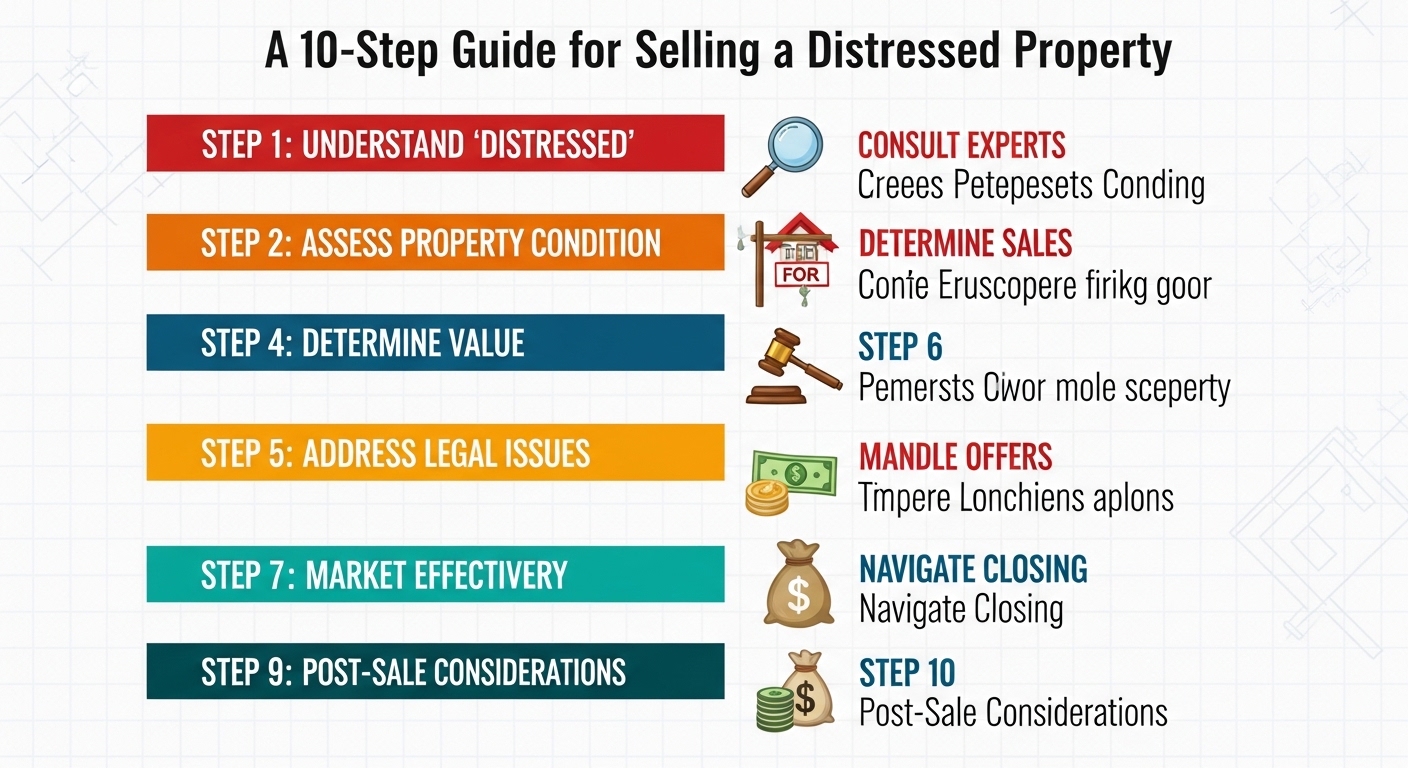
A 10-Step Guide for Selling a Distressed Property
A 10-Step Guide for Selling a Distressed Property
by Uriel Resendiz | February 16, 2026 | Blog, English
Not every home hits the market in picture-perfect condition. Some properties need major repairs. Others are outdated, inherited, vacant, or simply neglected over time. While selling a distressed property can feel overwhelming, you are not without options.
Whether you list it “as is,” renovate strategically, or explore auction routes, the key is understanding what you own, what it’s worth, and which path aligns with your timeline and financial goals.
Here’s a practical 10-step roadmap to help you move forward confidently.
Step 1: Evaluate the Property Honestly
Before making decisions, get clear on the home’s current condition and market value.
A real estate agent can prepare a comparative market analysis to estimate fair market value. A licensed contractor can assess structural, mechanical, and cosmetic issues with cost projections.
Ask:
What is the realistic as-is value?
What repairs would increase value meaningfully?
Are the issues cosmetic or structural?
Distressed homes with cosmetic problems often provide better return potential than those with foundation or roof failures.
Step 2: Understand Your Selling Options
There is no single way to sell a distressed home. Consider which option fits your needs.
Traditional Listing
Working with an agent may generate the highest sale price, but it requires time, potential repairs, and commissions.
Cash Buyers or Investors
Flippers and wholesalers purchase properties as-is and close quickly. Offers are usually lower but faster and simpler.
iBuyers
Technology-driven companies provide quick offers. Fees and pricing adjustments apply.
Auction
Auctions can attract cash investors and eliminate drawn-out negotiations. However, you sacrifice pricing control and pay auction fees.
Renting
If the property can generate positive cash flow, renting may be viable. Factor in repairs, maintenance, and property management fees.
Disclaimer (for inherited property)
Heirs may legally refuse inherited property in certain cases. This requires formal filing and strict deadlines.
Choose the path that balances speed, profit, and effort.
Step 3: Decide Whether to Renovate
Not every distressed property needs a full renovation.
Focus on:
Safety hazards
Structural issues
Visible defects that scare buyers
Cosmetic updates like paint, landscaping, and decluttering often produce strong returns without heavy investment.
If renovations are required, hire licensed, insured contractors. Obtain at least three bids and build in a 10 to 20 percent contingency fund for surprises.
Step 4: Declutter and Simplify
Even distressed homes benefit from presentation.
Remove debris, excess furniture, personal items, and anything that makes the property feel chaotic. Clean thoroughly. Neutralise odors. Improve lighting.
The more open and clean the space feels, the easier it is for buyers to see potential.
Step 5: Price Strategically
Pricing is critical when selling a distressed property.
Too high and buyers won’t engage. Too low and you lose leverage.
Use local comparable sales adjusted for condition. If selling as-is, price accordingly. If auctioning, understand minimum bid thresholds.
Ask yourself:
Am I prioritising speed or maximum value?
How much flexibility do I have to reduce the price?
Step 6: Market to the Right Audience
Your buyer may not be a traditional family.
Potential buyers include:
Real estate investors
Flippers
Contractors
First-time buyers seeking affordable entry
Cash buyers
Highlight opportunity instead of perfection. Market the property as potential, investment upside, or a blank canvas.
Step 7: Be Transparent About Condition
Disclose known defects clearly. Transparency protects you legally and builds trust.
Consider obtaining a pre-listing inspection so you understand potential red flags before negotiations begin.
Keep documentation for:
Permits
Major system replacements
Service records
Utility upgrades
Honesty reduces the risk of litigation and delayed closings.
Step 8: Consider Incentives
In distressed sales, flexibility can close deals.
You may offer:
Closing cost assistance
Repair credits
Flexible move-out timelines
Seller financing (where legally appropriate)
Everything is negotiable. Structure the agreement to fit both parties.
Step 9: Prepare for Financing Challenges
Some distressed homes do not qualify for traditional financing due to condition.
Cash buyers simplify the process. If buyers need financing, be prepared for:
Appraisal issues
Lender repair requirements
Inspection negotiations
Understanding these risks helps you anticipate potential delays.
Step 10: Stay Patient and Focused
Distressed properties can take longer to sell depending on market conditions. Peak selling seasons typically run late winter through spring, when buyer activity increases.
Before listing, ask:
How long can I carry this property?
What is my backup plan if it does not sell?
What is my minimum acceptable outcome?
Clarity prevents emotional decision-making.
Final Thoughts
Selling a distressed property is not about hiding flaws. It is about understanding value, choosing the right strategy, and positioning the home appropriately for the right buyer.
With careful planning, realistic pricing, and the right professional support, even a home others may overlook can become a strong financial opportunity.
Ready to explore your options? Speak with an experienced real estate professional today to evaluate your property and determine the best strategy for your timeline and goals.
